
TB-500 is a synthetic fragment of Thymosin Beta-4 , the Ac-LKKTETQ region, linked in preclinical work to cell migration and angiogenesis through G-actin regulation. BPC-157 is a synthetic fragment derived from a gastric protein, examined preclinically for soft-tissue and tendon repair and gut-protective effects. They are blended in one vial (but they do not act on a single shared pathway — the idea of combined “synergy” is a hypothesis), not a demonstrated effect. Practical points that keep daily administration safe and consistent. A concise summary of the once-daily regimen for the combined four-peptide vial.
In the documented protocol (daily during the 4-week activation phase), then 5×/week for weeks 5–8, then 2–3×/week for maintenance. The documented dose then draws to 0.10 mL / 10 units.

Add 3 mL of bacteriostatic water to the 80 mg vial for a 26.67 mg/mL solution. Is there a KLOW peptide dosage and frequency chart? GHK-Cu is the best-characterized of the four, with a substantial mechanistic and topical-skincare literature behind it, which makes it a reasonable anchor to build a blend around.
KLOW Labs’ ownership of KLOW Blend refers specifically to the proprietary formulation and branded combination — and does not represent ownership of the underlying individual compounds. The difference between that and mystery powder matters more than the price difference ever will. When you’ve exhausted conventional options and you’re stuck with an injury that isn’t healing — KLOW offers a research-backed approach that addresses multiple mechanisms at once. Research on these individual peptides shows accelerated wound healing (reduced inflammation), improved tissue regeneration, and better recovery across multiple tissue types. At the standard 10-unit daily draw a vial lasts 20 days (so on the sale that’s roughly $3.57 a day), versus about $4.95 a day buying the four peptides separately at the same discount.
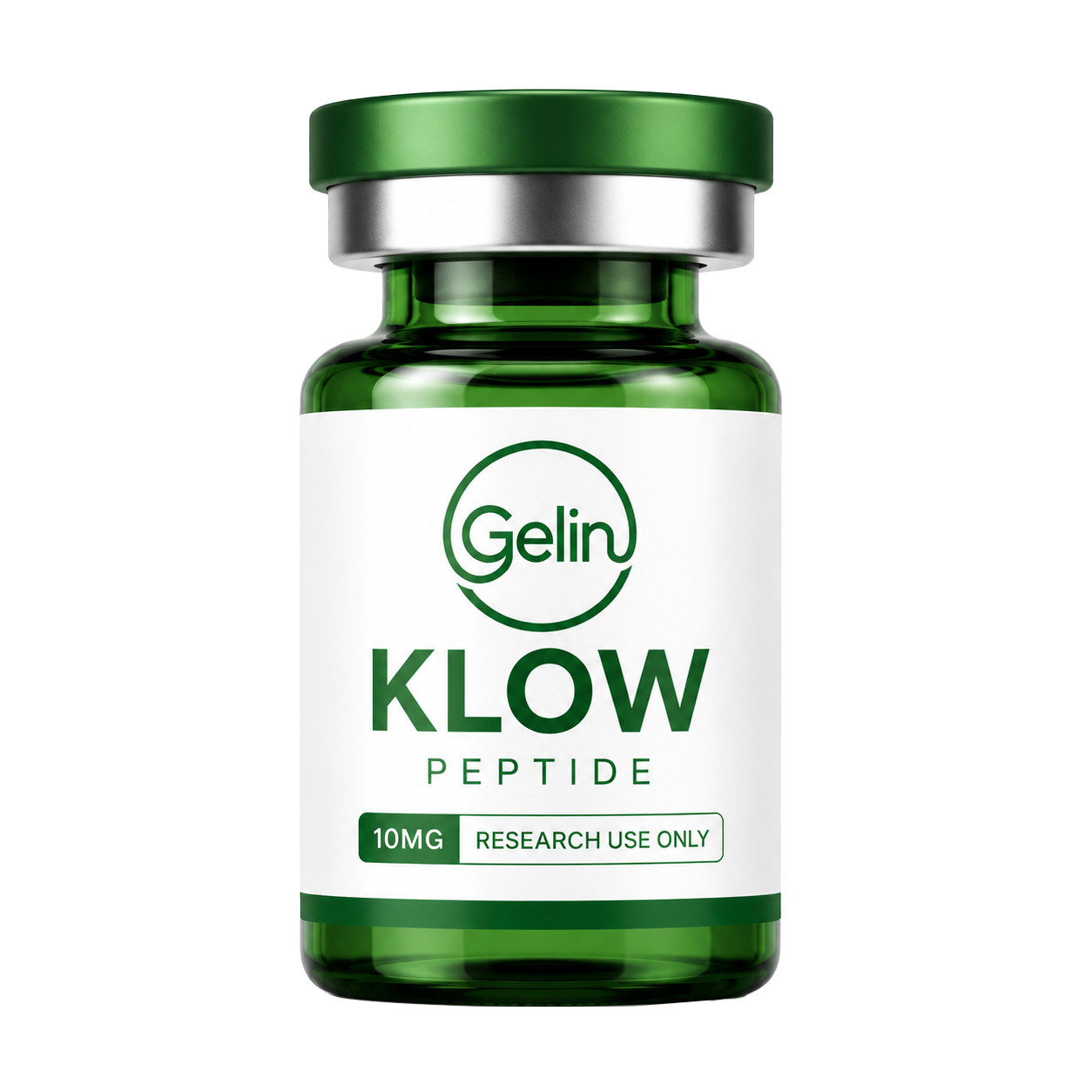
In one in vitro study, BPC-157 increased the outgrowth and migration of tendon fibroblasts in a dose-dependent manner and up-regulated the growth-hormone receptor in those cells. In rodent tendon and muscle models it has been studied for its effect on cell migration and angiogenesis , new blood-vessel formation,. Some suppliers list different totals or split the four peptides evenly, so the certificate of analysis for a specific vial is the only reliable source for its exact composition. The standard commercial format is labeled “KLOW” — or “KLOW 80”, where 80 refers to the total lyophilized (freeze-dried) peptide mass across all four components in a single vial. Peptides referenced are research chemicals, not for human consumption.
This Klow Dosage Chart shows the most common community titration for the standard 80 mg vial reconstituted with 3 mL of bacteriostatic water. It is commonly examined in research settings where combined peptide formulations are studied for their collective behavior, stability, and analytical performance under standardized laboratory conditions. She translates the published pharmacology and clinical literature on peptide mechanisms, dosing and reconstitution into clear, well-referenced explainers. Larger doses do not “make up for” missed days; the protocol therefore front-loads frequency and holds the dose fixed. Because there is no blend-level human safety dataset, the cautions below are extrapolated from the individual components’ known biology and the standard cautions applied across the peptide-research literature. The documented research protocol for the 80 mg KLOW vial uses a single fixed per-dose amount, then varies frequency across a cycle rather than changing the dose size.
The certificate of analysis tells you what is actually in the vial. Because no standards body defines it, two vials sold as “Klow” can contain different peptides or different amounts. We found no published controlled human trial of injected BPC-157 (the TB-500 fragment or KPV), and no study of all four together. The combined effect is framed as faster healing plus better connective‑tissue quality—useful where injury, inflammation, and collagen remodeling all matter simultaneously. KLOW adds KPV which has additional anti-inflammatory and gut health benefits. Take standardized photos in the same lighting and angle once per week.
They are not approved by the FDA for human or veterinary use, and nothing here is medical advice, a dosing recommendation, or an instruction for self-administration. For pure skin aesthetics they’re similar; for people with inflammation or gut issues, KLOW tends to produce more results. It is not intended for human or veterinary administration. Each component of KLOW™ is independently identifiable and has been referenced in scientific research literature. Not for human or veterinary use (administration), ingestion, injection, compounding, diagnostic, therapeutic, clinical, or personal use.
The presence of human-derived cell lines in some experiments does not imply that participants in the study received KPV. Any lack of information regarding KLOW should not be construed as a suggestion for administration in humans or animals. KLOW should be considered for exploration under appropriate medical supervision if you are facing chronic injuries (gut complications), joint concerns, or unresolved tissue damage. Collagen and connective tissue are rebuilt by GHK-Cu (inflammation is controlled by KPV), TB-500 promotes cell migration and the formation of new blood vessels, and BPC-157 aids in stabilizing and repairing damaged tissues. The typical protocol involves administering the treatment subcutaneously (generally in the thigh or abdominal area), either once daily or every other day.
Both are community conventions, not trial doses. Anyone with gut issues, IBD, chronic inflammation, or wanting maximum anti-inflammatory effect If you have any chronic inflammatory condition, gut issues, IBD, or just a generally inflamed system, KLOW is almost certainly the better choice. Hair is the slowest of all the KLOW results , which confuses people who don’t expect it.
This guide outlines how the purity of multiple peptides in formulations is confirmed using HPLC and mass spectrometry techniques. Composed with AI assistance by the research desk at PeptideEuropa.com; always cross-check with primary literature. This is not intended as medical advice, and the peptides mentioned have not received approval for use in humans or animals. Ensure HPLC purity exceeds 99% (obtain a lot-specific certificate of analysis that includes HPLC and mass spectrometry data), and confirm the supplier’s shipping location and customs status in your area.
KLOW-80 is an intentional effort to utilize various, distinct mechanisms in the research of tissue repair. When sourcing peptides for research, it is essential for researchers and suppliers to emphasize quality assurance. While single-peptide strategies may saturate a single pathway, multi-peptide methods aim to simultaneously address multiple rate-limiting steps. Combinations that are redundant utilize several agents aimed at the same signaling nodes, which is likely to result in wasted resources and provide no benefit over optimizing a singular agent. A lot-specific certificate of analysis indicating 99%+ HPLC purity has been dispatched from the Netherlands. When a dose is entered, the calculator above will display the result as “doses per vial.
It combines a copper-binding skin-remodeling peptide with three tissue-repair and anti-inflammatory peptides — bundling four compounds that researchers otherwise reconstitute and inject separately. The documented research schedule runs daily through weeks 1–4, five times a week through weeks 5–8, then two to three times a week for maintenance. The dose size never changes; the frequency does. No stability study has been published for the four-peptide KLOW mix in solution, and CoreVionRX does not state a fixed refrigerated window. 2 mL gives 40 mg/mL of total blend, 4 mL gives 20 mg/mL and 5 mL gives 16 mg/mL. Add bacteriostatic water slowly down the side of the vial and swirl gently until dissolved.