
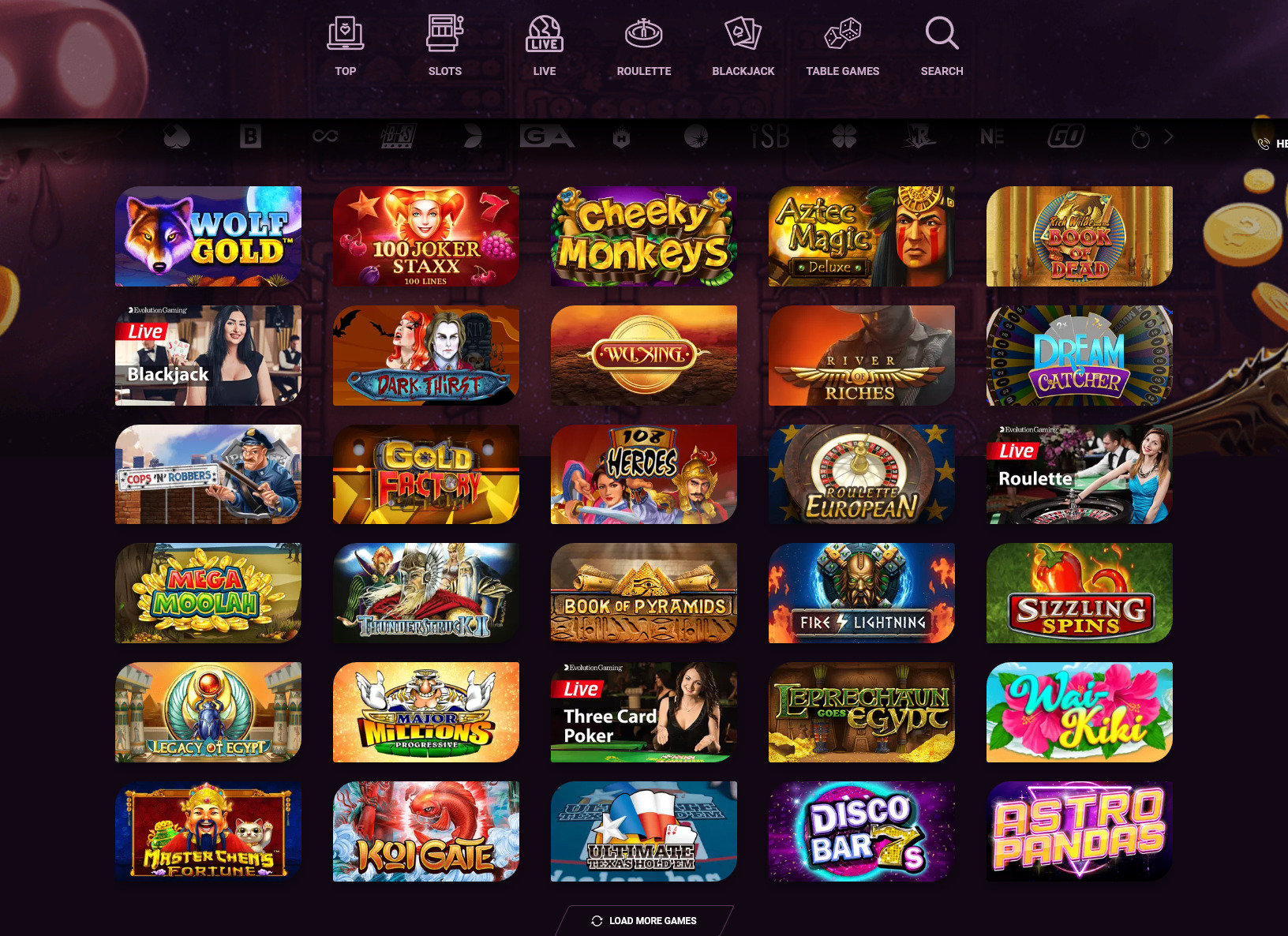
Casino leaderboards have swiftly evolved from simple high-score tables into sophisticated competitive ecosystems that shape how players interact with online gaming platforms. In the Austrian online casino market, these ranking systems now drive a substantial portion of player activity by combining skill-based progression with the appeal of exclusive rewards. Sloterra Casino has enhanced this concept by incorporating leaderboards that are clear, frequently updated, and tied to a wide suite of games, offering a unambiguous competitive framework where every wager contributes to a observable standing among peers.
The conversion of leaderboard points into actual prizes is where theoretical competition transforms into bankroll impact. Cash prizes stand the most direct and popular reward format, credited immediately or within minutes of the leaderboard clock striking zero. The immediate liquidity of a cash prize contrasts sharply with cbc.ca bonus credits, which carry wagering requirements that govern how many times the sum must be played through before a withdrawal becomes possible.
Bonus credit prizes at Sloterra Casino commonly attach a rollover multiplier that sits within the standard range common across Austria’s regulated environment, frequently between twenty-five and forty-five times the bonus amount. the best source Players assessing whether to compete seriously should calculate the expected value of a prize position by weighing the bonus amount against its attached playthrough conditions, guaranteeing the net value validates the wagering required to secure the rank.
Physical luxury prizes and experience-based rewards occasionally show up in premium tournament tiers, turning digital competition into tangible lifestyle gains. High-end electronics, luxury holiday packages, and even automotive prizes have been handed out through casino leaderboards, though these carry alternative terms involving verification windows and delivery logistics that digital prizes do not have.
Free spins granted as leaderboard prizes commonly constitute the highest effective value for slot enthusiasts because they regularly carry zero wagering requirements on the winnings generated. Under Austrian responsible gaming guidelines, transparent operators explicitly mark whether these spins are wager-free or capped, and players should always open the terms section before rejoicing a leaderboard result.
The mobile gaming segment in Austria has developed to the point where over three-quarters of casino traffic originates from smartphones and tablets, making mobile leaderboard design not a subordinate concern but the primary interface challenge. Compact screen measurements demand a strict simplification of displayed columns, typically reducing the ranking view to position, alias, and score while pushing prize details and terms to expandable drawers.
Sticky positioning of a user’s own rank constitutes a micro-interaction that dramatically improves mobile usability. Rather than forcing constant scrolling through dozens of entries to find personal standing, this UI pattern pins the player’s current row at the bottom of the screen while the rest of the list scrolls beneath it, offering instant orientation upon every glance.
Push notification integration allows leaderboard participants to obtain alerts when they have been overtaken or when a tournament is approaching its final hour. sloterracasino mobile spielen employs granular notification controls so that players can flip these competitive nudges on or off independently of promotional marketing messages, respecting the boundary between useful information and intrusive prompting.
Touch-target sizing for leaderboard filter toggles and game-launch buttons must satisfy accessibility standards to stop mis-taps during the fast-paced closing minutes of a tournament. The mobile interface assessed for Sloterra Casino’s Austrian user base highlights thirty-by-thirty-pixel minimum touch zones and clear visual separation between the leaderboard table and the adjacent spin button, cutting costly accidental wagers.
Not all leaderboards are made the same, and advanced operators combine multiple competitive formats on top of each other. The most conventional format remains the wagering race, where sheer turnover volume dictates the hierarchy. High rollers inevitably dominate the summit of these tables, though smart casino design balances this by implementing bracket-based subdivisions that cluster players with similar activity levels into distinct leagues.

Multiplier-centric leaderboards reverse the dynamic by focusing on efficiency over raw spending power. In these setups, a player wagering ten euros on a high-volatility slot and landing a five-hundred-times multiplier could beat someone who staked five hundred euros but only doubled their money. This egalitarian twist resonates with recreational Austrian players who choose to pursue big wins rather than grind high turnover.
A hybrid model, often seen in network promotions powered by major software aggregators, blends turnover points with multiplier achievements. The leaderboard algorithm weighs both factors simultaneously, producing a nuanced scoring metric that is hard to game. Sloterra Casino incorporates these varied structures at different times, allowing the competitive environment to shift between volume duels and jackpot sniper battles.
Live casino leaderboards form a distinct category where the scoring criteria change to factors like consecutive winning hands in Blackjack or the overall payout percentage across a session of roulette spins. The real-time nature of live dealer interaction makes these tables exceptionally engaging, as the rankings change between every hand or spin rather than after a slot session finishes.
A core distinction lies between in-house leaderboards managed solely on the Sloterra Casino platform and network-wide tournaments syndicated across multiple casino brands by game providers like Pragmatic Play or Play’n GO. In-house events draw from a smaller pool of participants, which mathematically raises the probability that any given player finishes within a prize tier, yet the total prize pools tend to be proportionally smaller.
Network promotions combine tens of thousands of players across the entire European footprint of a software provider, generating headline-grabbing prize pools that can exceed half a million euros. The trade-off involves competing against a vastly larger field where top rankings often require wagering volumes that only full-time professional players can sustain. For the typical Austrian recreational player, these events serve best as overlay opportunities where modest activity captures a share of a massive pool.
The transparency mechanics diverge between the two models. In-house leaderboards typically update in real time, while network events sometimes apply deliberate update delays of several minutes to prevent last-second sniping strategies. Sloterra Casino clearly indicates which type of leaderboard governs each active promotion, enabling players to adapt their end-of-tournament timing accordingly.
Prize crediting speed presents another variable because network promotions require the software provider to transmit the final results file to every participating operator after verification, which can extend the payout window by twenty-four to seventy-two hours. In-house tournaments at Sloterra typically settle within fifteen minutes of conclusion, with cash prizes reflecting instantly and bonus credits activating after a short automated compliance sweep.
At its core, a casino leaderboard functions as a real-time ranking system that assigns points to players based on specific actions, most commonly the total amount wagered or the number of spins completed on qualifying titles. The system manages thousands of micro-transactions within seconds, recalculating standings instantaneously to make sure that every player always observes an accurate reflection of the competitive field. This dynamic structure turns a solitary gaming session into a shared experience.
The point accumulation logic differs significantly between different types of promotions. Some leaderboards utilize a straightforward formula where one point equals one euro wagered, making it easy for participants to estimate their standing. Other systems apply a win-multiplier approach, where the ratio of a payout to the original stake defines the score, thereby rewarding high-volatility achievements even when the total turnover is modest.
Duration mechanics also play a decisive role in strategy. Daily leaderboards reset every 24 hours, compelling participants to keep up consistent engagement, while weekly or monthly marathon-style rankings reward sustained bankroll management rather than short bursts of activity. Sloterra Casino typically arranges its primary leaderboards around weekly schedules, giving Austrian players enough time to plan deposits around the competitive window without demanding constant screen time.
Understanding the prize distribution curve is essential because modern leaderboards rarely honor only the top three finishers. Instead, they operate on a tiered payout structure where perhaps the top fifty or even one hundred participants receive a scaled reward. This approach reduces the winner-takes-all pressure and allows players with moderate activity levels to still gain tangible value from the competition.
Leaderboards activate a potent psychological cocktail that combines social comparison theory with instant performance feedback, driving players to reassess their risk tolerance in real time. When a participant sees their name sliding downward as competitors surpass them, the brain’s loss-aversion circuitry kicks in, often triggering a deposit or an increase in stake size to reassert the prior position.
The transparency of competitor progress strips away the private nature of gambling and externalizes it, transforming what was a solitary decision into a public, trackable performance metric. This transparency can sharpen decision-making by compelling players to clarify their actual goals, yet it can also induce tilt-driven overextension when the gap to the next tier looks deceptively small.
Operators like Sloterra Casino apply mandatory responsible gaming guardrails within leaderboard interfaces, including reality-check pop-ups that display the session duration and net position at configurable intervals. Austrian players benefit from a regulatory culture that standardizes these tools, treating deposit limits and self-exclusion options as standard features rather than punitive measures.
The near-miss effect strengthens within a leaderboard context because finishing one position below a prize cutoff creates a sharper emotional sting than dropping an equivalent amount during standard play. Acknowledging this dynamic in advance allows players to pre-commit to stop-loss rules and maximum investment caps for a given tournament, protecting their long-term bankroll from the heat of a momentary competitive impulse.
Tackling a leaderboard without a planned strategy is akin to a financial misstep, because the relationship between wagering volume and prize tier is not always linear. The first analytical step entails scanning the prize table to detect the steepest drop-off in reward value, which usually happens between first and third place or between the top ten and the rest of the field. Aiming for a rank just above a sharp prize decline yields better return on wagered capital than chasing the absolute top.
Session timing carries tremendous influence, particularly on daily leaderboards. Experienced Austrian players often note that early morning hours carry lower competition density, allowing identical wagering levels to achieve higher ranks than the same activity during peak evening traffic. Sloterra Casino’s leaderboards, visible in real time, permit participants to monitor fluctuation patterns over several days before committing significant funds.
Game selection acts as a hidden multiplier in any leaderboard strategy because not all titles contribute equally to point accumulation. Slots typically contribute one hundred percent of every wager toward the ranking total, whereas table games and live dealer products often deliver at a reduced rate, sometimes as low as ten or twenty percent. Reviewing the eligible game list thoroughly stops wasted wagering on excluded or nerfed titles.
Volatility calibration on multiplier-based leaderboards presents a strategic fork: low-volatility slots accumulate steady multipliers that rarely reach the top percentiles, while high-volatility games generate the kind of outsized win-to-stake ratios that can boost a player thirty ranks in a single spin. The trade-off involves accepting drier spells in exchange for the chance of a single session-altering event that redefines the entire leaderboard standing.
The flawless leaderboard interface that players come across masks a complex technological framework designed to manage vast streams of gameplay data with minimal latency. Every spin, hand, or dice roll generates an event packet that travels from the game server to the promotion engine, which updates the affected player’s score and re-sorts the ranking array before sending the updated standings to all active session instances.
Data consistency represents a substantial engineering difficulty because a single delayed packet would temporarily misrepresent a player’s true rank. Modern solutions deploy distributed caching layers and conflict-resolution protocols that resolve small timing discrepancies within milliseconds, securing that the leaderboard shown on a mobile device in Vienna corresponds to the one viewable on a desktop browser simultaneously.
Sloterra Casino’s platform architecture uses responsive APIs that feed ranking data into a lightweight front-end, indicating the leaderboard does not demand a full page refresh when positions shift. Players can observe their ascent or descent passively while continuing to spin, a design choice that sustains the flow state of the gaming session without disrupting it for periodic manual checks.
Anti-fraud and collusion detection algorithms operate continuously beneath the leaderboard layer, examining for unnatural wagering patterns, bot-like timing consistency, and coordinate play between accounts. These systems safeguard the integrity of the competition without encumbering legitimate participants with visible verification steps, functioning silently to highlight anomalies for manual compliance review.
Ranked structures that position players publicly bring an additional layer of gambling-related risk that extends beyond the standard financial parameters of win and loss. The drive to maintain or improve a visible ranking position can supersede the rational bankroll management strategies that players apply during non-competitive sessions, forming a behavioral trap that even experienced gamblers sometimes omit to anticipate.
Pre-tournament budgeting serves as the single most effective safeguard against leaderboard-driven overspending. Setting a fixed amount that will be allocated to the competition before the first spin eliminates the incremental deposit decisions that gather into significant overextension. Sloterra Casino’s responsible gaming dashboard permits users to set tournament-specific deposit caps that are separate from general account limits.
Time-based controls warrant equal weight alongside monetary limits because leaderboards exert pressure to remain active during the final hours when ranking volatility climaxes. A player who establishes a session limit timer independently of the tournament clock secures that competitive engagement does not infringe on sleep, work, or family commitments, maintaining the recreational character of the activity.
The operator’s role in moderating competitive intensity includes prominent labeling of tournament rules, easy access to full prize distribution tables, and proactive messaging that frames leaderboards as entertainment rather than income-generating opportunities. Austrian regulatory philosophy stresses this framing, and Sloterra Casino incorporates it into the tournament interface through clear disclosures about the random nature of game outcomes underlying every leaderboard point.